
Through continuous R&D and technological innovation, we are creating new value in storage for the AI Devices era.
AIO is building technological competitiveness for the next-generation storage market based on its proprietary NAND Flash Controller technologies. Building on the technology and mass-production experience accumulated through SD, UFD, and eMMC Controllers, we are continuously advancing our storage Controller technologies.
As AI adoption continues to expand, Edge Devices are becoming increasingly diverse across Consumer, Industrial, and Automotive applications, while the data generated by these devices is growing rapidly. This is driving demand for storage solutions that can process and store data quickly and reliably. In response, AIO is expanding its technology portfolio beyond its existing Controller SoC and Firmware platforms to next-generation storage technologies, including UFS and cSSD, to address the evolving AI Devices market.
AIO is also strengthening its technological competitiveness through close collaboration with customers, NAND Flash manufacturers, foundries, and other partners, while continuously developing technologies that can flexibly address diverse environments and customer requirements.
Going forward, AIO will continue to leverage its proprietary R&D capabilities and technological innovation to provide high-performance, high-reliability storage technologies for the Edge Device era, creating new value in the future storage market.
Thank you.
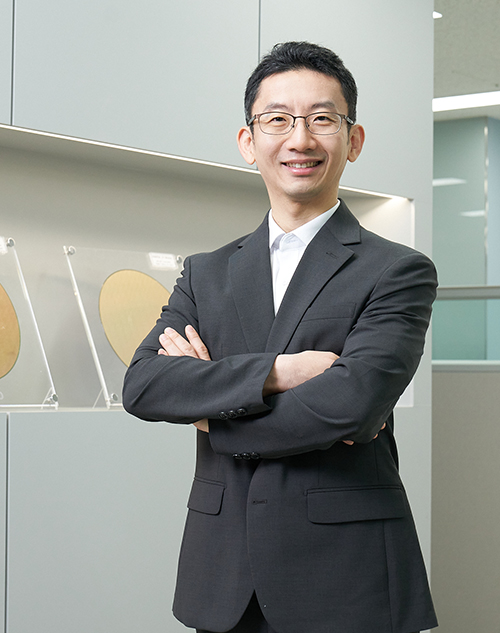
CTO
Seung-Hyun Han
Biography
Seung-Hyun Han, CTO and Co-Founder of AIO, oversees R&D for Storage Controller and Firmware technologies. After earning his degree in Electrical Engineering from Seoul National University, he developed expertise in memory storage technologies through NAND Flash Controller development at Samsung Electronics’ Memory Business. Since co-founding AIO in 2011, he has led the development of the company’s proprietary NAND Flash Storage technologies.
He designed AIO’s Tailorable Controller Architecture for diverse customers and Edge Devices and has led the development of core technologies including Controller SoC, Firmware, ECC, and FTL, driving the commercialization and mass production of SD, UFD, and eMMC Controllers.
He currently oversees both the mass production of existing products and the development of new products, with a focus on high-performance, high-reliability storage technologies for the Edge Device era.
Edge Storage Technology R&D Roadmap
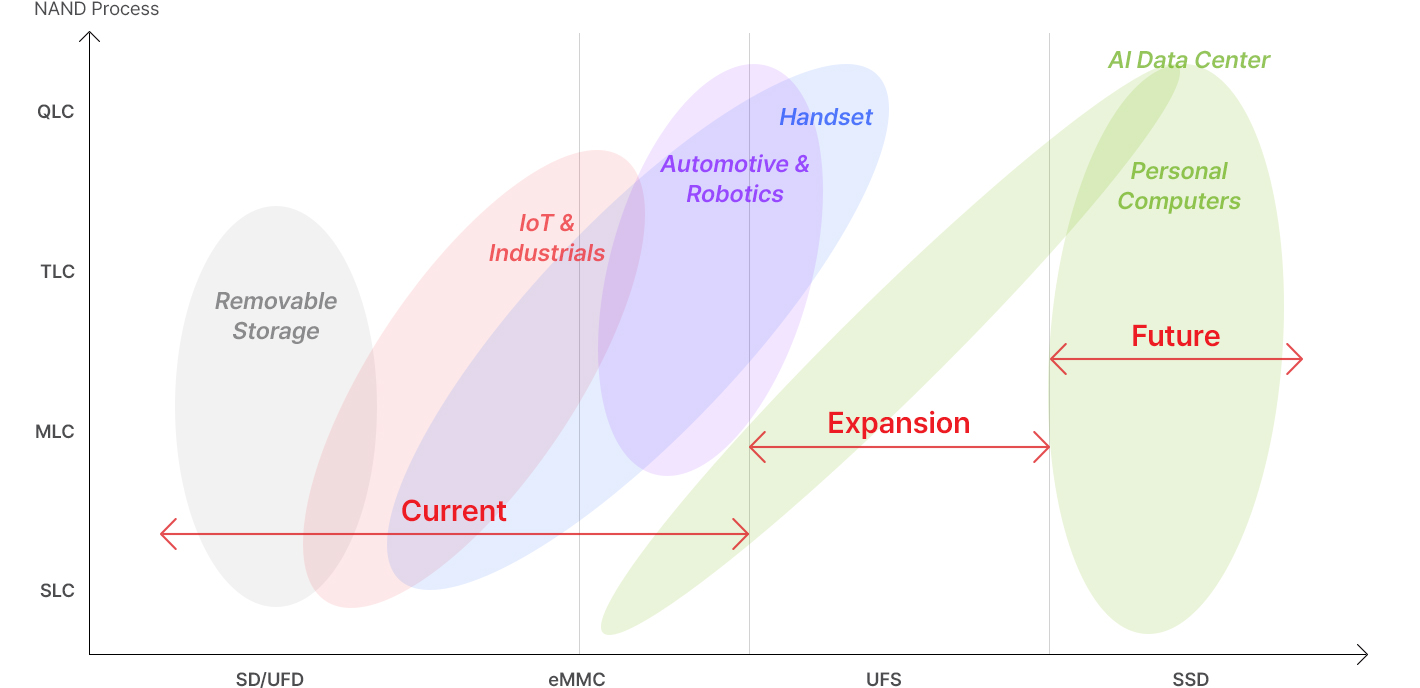
As AI becomes more widely adopted, Edge Devices—from smartphones, AI PCs, and wearables to autonomous vehicles and robotics—continue to evolve, making AI more accessible across a broader range of applications. This evolution is driving rapid growth in demand for storage solutions designed for Edge Devices. Building on its accumulated Controller SoC and Firmware technologies and R&D capabilities, AIO is expanding beyond SD, UFD, and eMMC to develop next-generation storage system semiconductors, including UFS and cSSD, strengthening its technological capabilities in Edge Device storage.
R&D Capabilities
Building on its proprietary Controller technologies and accumulated design expertise, AIO independently performs the entire development process, from Firmware and SoC design to product verification, strengthening its technological capabilities in next-generation storage. With approximately 73.5% of its workforce dedicated to R&D, AIO maintains a technology-driven organization focused on continuous innovation and the development of products for mass production.
-
 SoC Development
RTL Design / Verification,
PHY Development & Porting,
Top Architecture -
 Solution Development
FTL Development,
NAND Flash Firmware Development,
Host Interface Firmware Development -
 Product Engineering
Test Platform Development,
Product Verification, Analysis & Optimization
Technology Development History
Starting with eMMC and expanding into SD Cards and UFDs, AIO has continuously broadened its storage product portfolio for Edge Devices while advancing its proprietary Controller and Firmware technologies. Building on technological expertise accumulated from development through mass production, as well as collaboration with a leading Korean memory semiconductor company, AIO continues to strengthen its competitiveness in next-generation storage technologies.
Building on its accumulated R&D achievements, AIO has also established a competitive intellectual property portfolio in core Storage Controller technologies, with 30 Korean patents (19 registered and 11 pending) and six registered overseas patents. With patents spanning both Firmware and SoC technologies, AIO continues to strengthen its technological competitiveness across SD Cards, UFDs, and eMMC, while expanding into next-generation UFS technologies.
- 2015 First Commercial Development of eMMC Controller
- 2018 Mass Production and Supply of eMMC Controllers
- 2020 Development of SD Card Controller
- 2022 Mass Production and Supply of SD Card Controllers
- 2024 Development of Third-Generation eMMC and High-Performance UFD Controllers
- 2025 Expansion of eMMC Mass Production
Core Technologies
AIO’s core technology is its Tailorable Storage Architecture, designed to flexibly support diverse product and interface requirements. Built on AIO’s proprietary Controller SoC and Firmware assets, the architecture has been applied to SD Cards, UFDs, and eMMC and validated through mass production. It is also designed to extend the same technology assets to next-generation storage solutions, including UFS and cSSD.
-
NAND Flash Tailorable Architecture
A platform architecture designed to support a wide range of NAND Flash products based on common IP
-
Tailorable Architecture:
Flexible support from legacy products to the latest standards through a common architecture -
HW Automation:
High-performance data processing through automated data flow control between Host and NAND -
Dynamic Mapping FTL:
Low-cost, high-performance operation with a small SRAM footprint -
In-House PMIC IP Design:
Low-power operation through optimized Active/Sleep power management
-
Tailorable Architecture:
-
Reliability & Endurance Enhancement Technologies
Core technologies that ensure high reliability and endurance even in high-layer-count 3D NAND environments
-
Scalable LDPC ECC:
Overcomes high BER in high-layer-count NAND through structural scaling from 2KB to 4KB and 16KB -
Dynamic ORS Algorithm:
Achieves high reliability by identifying the optimal Read Level and matching it with protection codes -
Dynamic Bad Block Management:
Overcomes physical endurance (PBA) limitations through integration of Return VB and Two-Plane VP Mapping -
High-Endurance Cycle Validation:
Validates and optimizes product endurance through testing under harsh conditions
-
Scalable LDPC ECC: